
Burden of Arthritis in Canada
Revealing the hidden economic and social cost of one of Canada’s most widespread chronic diseases
View publication →
20+ years of socio-economic intelligence
CANCEA combines systems modelling, economic analysis and social-value measurement to help governments, associations and businesses understand consequences before they act.
What we do
CANCEA organizes its work around six integrated client needs. Each can draw on the same underlying economic, demographic, social, fiscal, infrastructure and regional modelling capabilities.
Frame decisions, build baselines and test alternative futures, policies and sensitivities.
02Connect economic activity to supply chains, workers, households, regions and governments.
03Link growth, services, infrastructure, financing and affordability across long time horizons.
04Trace housing demand, supply, household incomes, development and policy together.
05Evaluate projects and policies against credible counterfactuals across economic and human outcomes.
06Develop public research and contribute modelling and analytical capability to joint teams.
Why connected systems matter
A housing decision can affect labour availability, household finances, infrastructure demand, and public revenues. Analysing each effect in isolation risks missing the trade-offs and feedback between them. CANCEA connects people, institutions, industries, accounts, and places so decision-makers can examine how consequences travel through the wider system, not just where they first appear.
Recent research
Revealing the hidden economic and social cost of one of Canada’s most widespread chronic diseases
View publication →
Not all approaches to measuring social value answer the same question. As interest in social value grows across infrastructure, transportation, energy, housing, and public policy, understanding what different methodologies capture—and what they miss—is critical to making informed decisions.
View publication →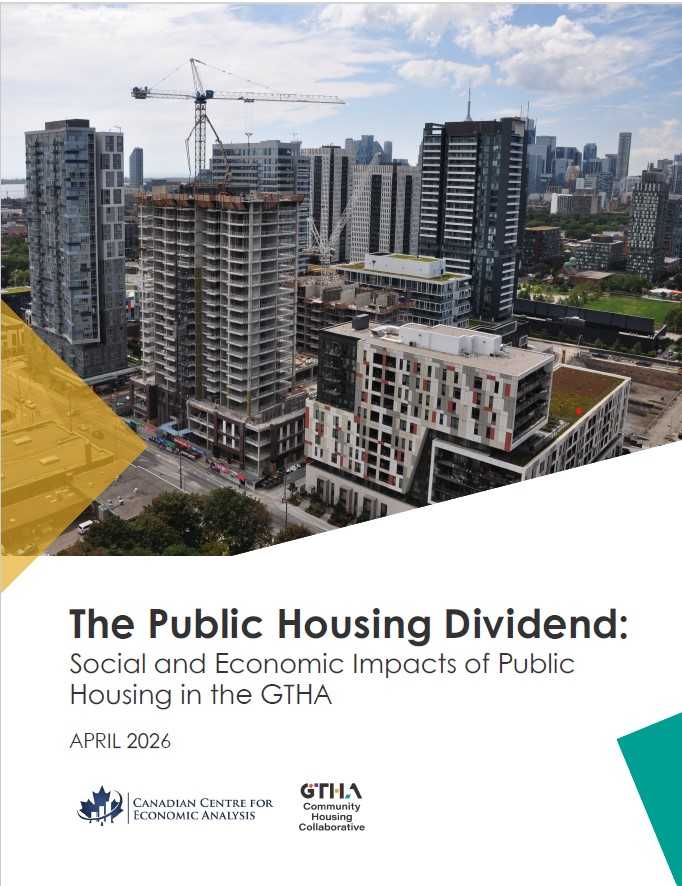
For decades, public housing has been treated as a cost to manage — a line in a budget to defend or to trim. The Public Housing Dividend asks a different and more important question: what is public housing actually worth to the people who live in it, the communities around it, and the economy as a whole?
View publication →Have a decision to make?
Tell us what you need to compare, understand or defend. We will tell you what evidence is possible.
Start a conversation